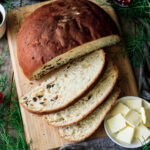
Julekake: Norwegian Christmas Bread
This delicious Norwegian bread is a traditional treat served at Christmas. It’s full of raisins and citron, and has a fluffy texture. You’ll enjoy the festive aroma and taste of this Scandinavian dessert!
Servings: 12 servings
Calories: 317kcal
Ingredients
- 4 ⅛ cups bread flour
- 3 teaspoons fast-action yeast
- 2 teaspoons salt
- ⅓ cup granulated sugar
- 2 teaspoons ground cardamom
- ¼ cup unsalted butter softened
- 2 large eggs
- 1 cup whole milk
- ¾ cup raisins
- ¾ cup candied citron peel diced
Instructions
- Pour the flour into a mixing bowl and add the salt and yeast on opposite sides. Stir each one in with your finger.
- Mix in the sugar, cardamom, butter, and eggs until well combined.
- Warm the milk to 115°F in the microwave or a small saucepan, then gradually add it to the flour mixture. Stir and crush the ingredients together with your hand and continue adding milk until a somewhat sticky dough forms.
- Turn the dough onto a floured surface and knead until the dough is no longer sticky and passes the windowpane test, about 10-15 minutes. Do the windowpane test by pulling off a lump of dough and stretching it as thin as you can. If it stretches to be translucent without tearing, it's kneaded enough.
- Shape the kneaded dough into a ball, place it in a buttered bowl, and cover tightly with plastic wrap. Let it rise in a warm place until at least doubled in size, about 1 ½ hours.
- Punch down the dough, then turn it onto a lightly floured surface and pat the dough flat. Knead in about half of the raisins and citron until it's evenly distributed, then add the rest of the dried fruit.
- Shape the dough into a large round loaf and pick off any pieces of dried fruit on the outside crust of the bread. This will prevent the fruit from burning in the oven.
- Place the loaf on a parchment-covered cookie sheet and cover it with plastic wrap. Let the loaf rise in a warm place until it's springy to the touch, about 30 minutes.
- Bake the julekake at 375°F for 40-45 minutes, covering it with foil halfway through the baking time if needed. The julekake is done when a digital thermometer registers 190-200°F inside.
- Let the julekake cool for at least 1 hour on a wire rack, then slice and serve with butter, brunost (Norwegian goat cheese), and hot coffee.
Notes
- Always use bread flour to get a high rising, fluffy julekake.
- Grind your own cardamom for the best flavor.
- Using fast-action yeast eliminates the need for blooming the yeast before you make the dough.
- A stand mixer makes it faster to knead the fruit into the dough.
Nutrition
Serving: 1slice | Calories: 317kcal | Carbohydrates: 57g | Protein: 8g | Fat: 6g | Saturated Fat: 3g | Polyunsaturated Fat: 1g | Monounsaturated Fat: 2g | Trans Fat: 1g | Cholesterol: 43mg | Sodium: 428mg | Potassium: 190mg | Fiber: 3g | Sugar: 14g | Vitamin A: 208IU | Vitamin C: 1mg | Calcium: 60mg | Iron: 1mg
